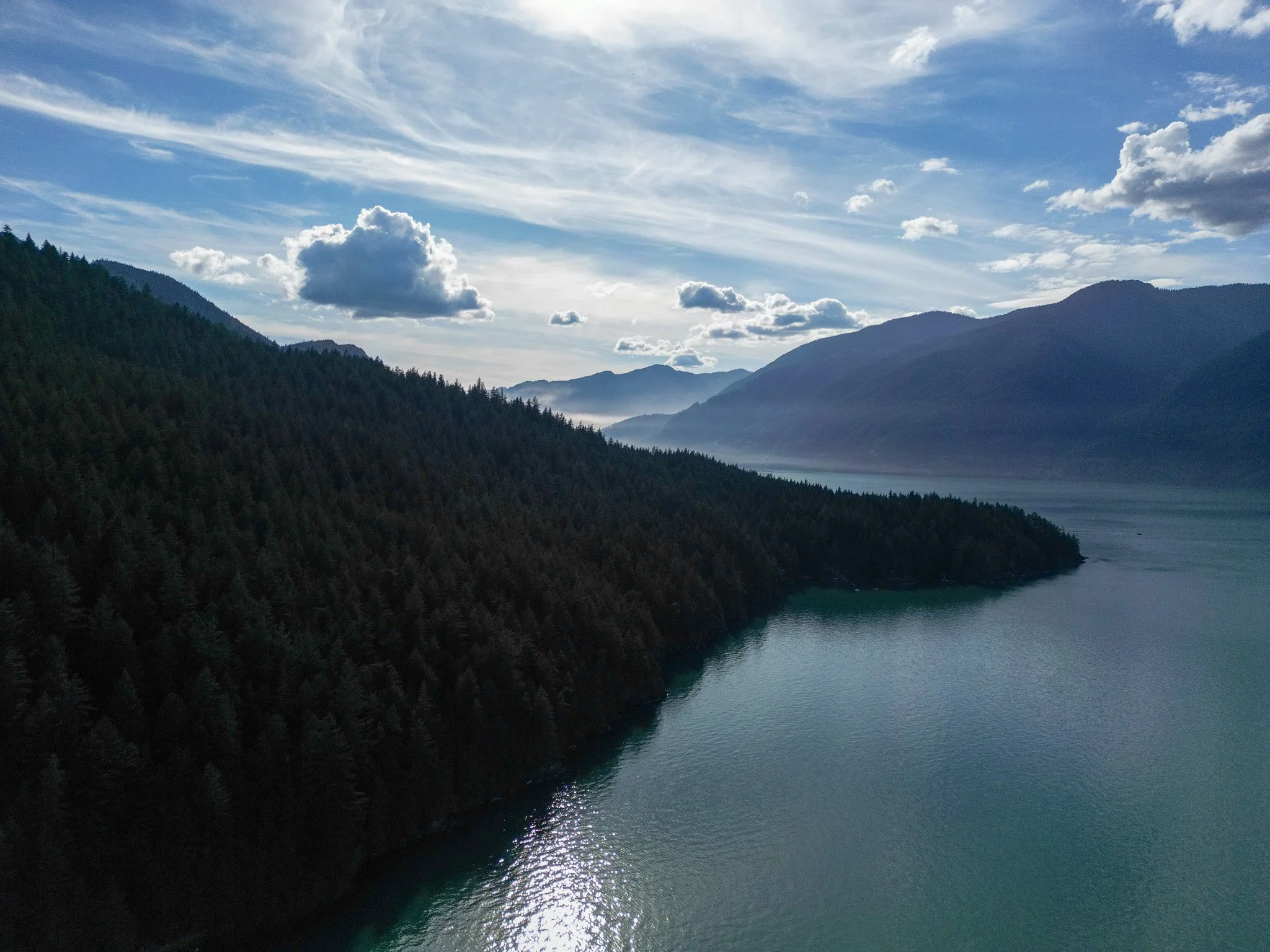
Building in Howe Sound: Why People Do It, and What It Actually Takes
Introduction
Let me be blunt: building in Howe Sound isn’t for the faint of heart.
There are easier places in B.C. to pour concrete and raise walls with no tides, no waiting three days for the thing you forgot. But folks don’t head out to places like Gambier or Keats because they want it easy. They come because they want to connect with nature and create something of their own amongst the quiet, the trees, and the water. A break from the noise. And maybe, something to point at years from now and say, “We built that.”
It’s a project that’ll test you. You’ll have cold mornings where nothing’s going right. You’ll question your own sanity. But when it’s done, and you’re enjoying the sunset on your patio, it’ll all land differently.
Logistics First
People love to talk about floor plans. But before any of that matters, you need to answer a boring, simple question:
How do you get stuff to the lot not just once, but ten, twenty times? In winter, in sideways rain, when the dock’s icy?
Because there’s no bridge. No gas station. No store down the road when you realize you’re out of nails. If you forget something, you wait. If you didn’t plan staging right, your materials sit in the rain. If the barge can’t come, you’re stalled.
Design can wait. First, figure out how you move things.
Barges
The part no one brags about on Instagram.
They’re not glamorous. But if you get them wrong, the whole build suffers. I’ve seen it too many times: five trips for what could’ve been one, lumber dropped with nowhere to store it, trades standing around because half the order didn’t make it.
Want advice? Here:
Fewer trips. Bigger loads. Get it right the first time.
Make a dry, secure space to store deliveries. Tarps aren’t enough when the wind picks up.
Don’t wait until you need something. If you think you might need it, get it over there now.
Barges are just trucks that float, but they can sink your schedule if you treat them like an afterthought.
Off-Grid Systems
“Off-grid” sounds cool until you’re showering with a flashlight because you blew the inverter.
Out here, being off-grid isn’t an aesthetic; it’s the default. And if you plan it right, it’s great. Quiet, efficient, independent. But if you don’t? It’s duct tape and regret.
Power: Solar, batteries, generator backup, it works, but only if you size it for how you actually live. Want a heat pump, cooktop, and power tools? Design for it. Don’t just guess and hope it holds.
Water: Wells can be magic. They can also be dry. Rain catchment works too if you’ve got the tanks and treat the water right. Don’t assume. Test. Plan. Overbuild if you can.
Septic: This is the one people skim over. Your lot may look perfect until you try to get a wastewater permit. Slope, setbacks, and soil all matter. Don’t design your dream house first. Check the ground under it.